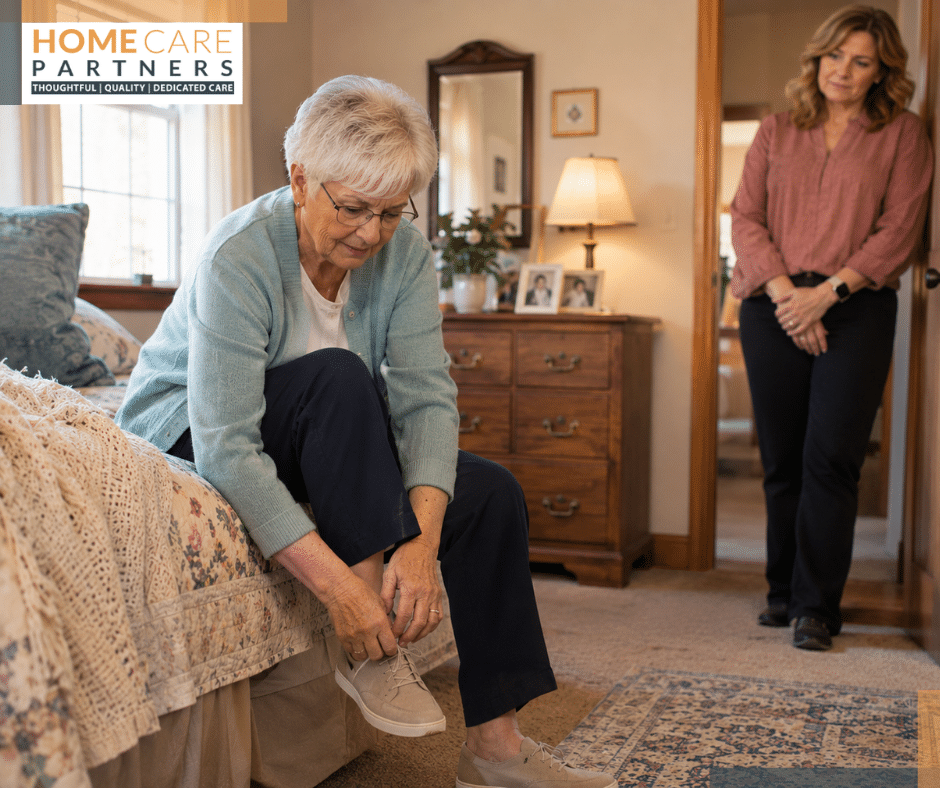
I was standing in the kitchen when I noticed Mom had stopped in the doorway.
“Mom, are you coming?”
She didn’t answer right away. Her eyes were focused on the floor, and her feet wouldn’t move.
At first, I thought she was hesitating.
Then I saw the frustration on her face.
She wanted to take another step. Her body simply wasn’t cooperating.
That was the moment I realized Parkinson’s was changing more than the way my mom walked.
It was changing how safe she felt in her own home.
And it was changing how much I worried about her when I wasn’t there.
The Emotional Reality of Watching Mom Struggle With Parkinson’s
When your mom has Parkinson’s disease, you begin noticing things you never thought twice about before.
The way she gets up from her favorite chair.
How carefully she turns around in the kitchen.
The extra time it takes her to walk from one room to another.
And sometimes, the frightening moments when she suddenly cannot move forward.
For adult daughters, these changes can bring an overwhelming mix of emotions.
You want to encourage Mom to remain independent, but you’re afraid she might fall. You want to respect her privacy, but you wonder whether she should be alone.
And perhaps the hardest part is watching her become frustrated with things that used to feel effortless.
That’s when Parkinson’s care at home can become an important part of supporting both Mom and the family who loves her.
Because protecting her independence doesn’t have to mean leaving her to manage every challenge alone.
Understanding Parkinson’s Freezing of Gait
One of the lesser-known movement challenges associated with Parkinson’s disease is something called freezing of gait.
It happens when a person temporarily feels unable to move their feet forward, even though they want to walk.
Some people describe it as feeling as though their feet are glued to the floor.
Freezing may occur when someone:
- Walks through a doorway or narrow space
- Turns a corner or changes direction
- Begins walking after standing still
- Moves between different floor surfaces
- Feels rushed, distracted, or anxious
Not everyone living with Parkinson’s experiences freezing. For those who do, the episodes can be unpredictable and may increase the risk of falling.
For a daughter watching her mom struggle, the instinct may be to say, “Come on, Mom. Just take another step.”
But rushing or physically pushing someone during a freezing episode can increase the danger.
Remaining calm, allowing time, and using movement strategies recommended by a physical therapist may help.
New or worsening freezing episodes should also be discussed with Mom’s healthcare provider.
Why Staying at Home Often Helps Someone With Parkinson’s
For many older adults, home represents independence, comfort, and familiarity.
Mom knows where everything belongs.
She recognizes the furniture, the hallways, and the routines that have shaped her days for years.
When Parkinson’s begins making movement more difficult, those familiar surroundings can provide reassurance.
A predictable routine may also help reduce unnecessary rushing and stress.
Parkinson’s care at home can build on that familiarity while providing practical assistance with everyday challenges.
Simple adjustments may make a meaningful difference, including keeping walkways clear, improving lighting, and giving Mom extra time to move between rooms.
A healthcare professional can also recommend home modifications and individualized movement strategies.
The goal isn’t to take away everything Mom still does independently.
It’s to help her continue enjoying her home with appropriate support.
How Home Care Partners Helps Families Living With Parkinson’s
At Home Care Partners in Lincoln, Nebraska, we understand that Parkinson’s affects more than movement.
It can change daily routines, confidence, energy levels, and family relationships.
Our approach to Parkinson’s care at home focuses on compassionate assistance that respects each person’s needs, preferences, and abilities.
Gentle Mobility Support and Fall Prevention
Moving through doorways, getting out of chairs, and walking around the house may become more challenging.
Caregivers can provide patient assistance with everyday mobility, help maintain clearer pathways, and encourage Mom to take her time.
Mobility support should follow her healthcare team’s recommendations, especially if she experiences freezing episodes.
Medication Reminders and Daily Structure
Consistent medication schedules can be particularly important for people living with Parkinson’s.
Home caregivers can provide medication reminders and help maintain predictable daily routines.
They can also communicate observed changes or concerns to family members so these can be discussed with Mom’s medical team.
Meal Preparation and Personal Care
Preparing meals, bathing, and getting dressed may require more time and energy than they once did.
Compassionate assistance can make these routines feel less overwhelming while protecting Mom’s privacy and dignity.
Support with meals also provides opportunities to notice changes in eating habits or appetite.
Companionship and Family Caregiver Relief
Parkinson’s can sometimes make people reluctant to participate in activities they previously enjoyed.
Having someone there to offer conversation, encouragement, and companionship may help Mom feel more connected.
And for adult daughters, dependable in-home Parkinson’s support can provide something equally important: the opportunity to step away from caregiving responsibilities without feeling that Mom has been forgotten.
Let Home Care Partners help you find compassionate support for the person you love. Call or text Karla at Home Care Partners today at 402-780-1211.

Our Caregiving team provides personal one-on-one attention for your loved one. When you are ready to begin your care journey, we are the experts that will answer your questions and help you implement a plan.
Home Care Partners is locally owned and committed to providing Thoughtful, Quality, and Dedicated Care.
- The Day Mom Froze in the Doorway: Why Parkinson’s Care at Home Matters - November 20, 2026
- The Thanksgiving Home Safety Check - November 20, 2026
- A Discharge Planning Guide for Families Bringing a Parent Home - November 18, 2026