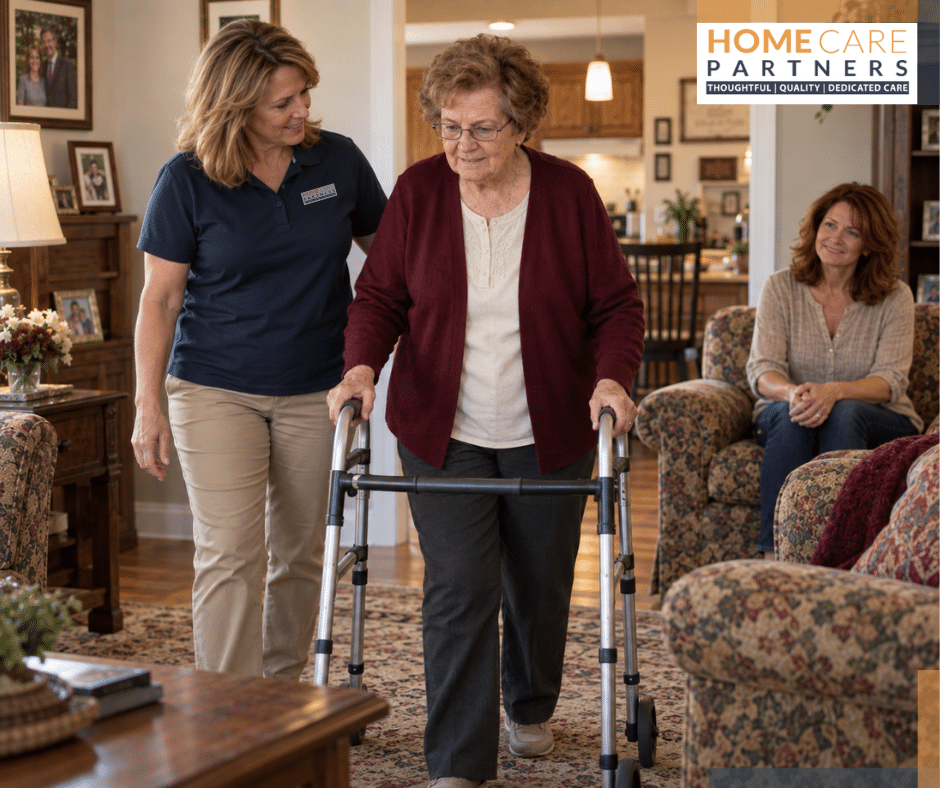
Do you worry about what happens when Mom is alone?
She became nervous about falling. And honestly, so did I.
Even simple walks across the house started feeling uncertain. Then every unexpected phone call brought the same thought: Did something happen?
For many families, that worry becomes part of everyday life. Parkinson’s care at home can provide an added layer of support, helping an older adult remain in familiar surroundings while giving family caregivers greater peace of mind.
The Emotional Reality for Family Caregivers
When someone you love has Parkinson’s, your role can gradually change.
At first, you might stop by a little more often. You make sure Mom has groceries. You check that she remembered lunch. You call to see how she’s feeling.
Then you begin noticing things that are harder to dismiss.
Maybe getting out of her favorite chair takes longer. Walking from the bedroom to the kitchen seems more difficult. You notice her holding onto furniture or hesitating before taking the next step.
Suddenly, being alone at home doesn’t feel as simple as it once did.
Family caregivers may find themselves constantly checking their phones, rearranging schedules, or worrying whenever they cannot be there.
That’s one reason families consider Parkinson’s care at home. The goal isn’t to take independence away. It’s to provide appropriate support so Mom can continue doing as much as possible while having someone nearby when she needs help.
Understanding the Challenges of Parkinson’s at Home
Parkinson’s can affect movement and make everyday activities more challenging. Symptoms and needs vary from person to person and can also change over time.
For families, some of the biggest concerns often involve everyday routines.
Can Mom safely get up and move around the house? Is she eating regularly? Is she remembering her normal routine? What happens if she needs assistance while nobody is there?
These questions can become exhausting when family members are trying to balance caregiving with jobs, children, appointments, and their own responsibilities.
In-home Parkinson’s care can provide practical support during the times when family members cannot be present.
Why Staying at Home Often Helps
Home represents much more than a physical location.
It’s Mom’s favorite chair by the window. It’s the kitchen she knows by heart. It’s photographs on the walls and familiar neighbors outside.
For someone living with Parkinson’s, familiar surroundings can also make daily routines easier to maintain.
With Parkinson’s care at home, an older adult may be able to continue following familiar patterns while receiving assistance with activities that have become more difficult.
A caregiver can help provide structure throughout the day, encourage regular meals, offer mobility assistance, and provide companionship.
Most importantly, Mom can remain surrounded by the people, possessions, and routines she knows.
How Home Care Partners Helps Families Living With Parkinson’s
Every family’s situation is different. Some older adults may need companionship and occasional assistance. Others may benefit from more consistent support throughout the day.
Home Care Partners can provide non-medical Parkinson’s care at home based on the individual’s needs and routines.
Support may include:
- Mobility assistance and fall prevention support: A caregiver can provide assistance as Mom moves around the home and help reduce everyday fall risks.
- Medication reminders: Caregivers can provide reminders according to an established medication schedule.
- Meal preparation and nutrition monitoring: Having someone prepare meals and encourage regular eating can make daily nutrition easier to maintain.
- Structured routines: Consistent routines can help make the day feel more predictable and manageable.
- Personal care assistance: Depending on Mom’s needs, caregivers can assist with everyday personal care activities.
- Companionship: Conversation and regular human connection can make long days at home feel less isolating.
- Respite for family caregivers: Professional support gives family members opportunities to work, handle responsibilities, rest, or simply spend time with Mom as family rather than always acting as the caregiver.
The purpose of Parkinson’s home care is not to replace family involvement. It can help make caregiving more sustainable by adding another trusted person to the support system.
Signs It May Be Time to Get Help
Families often wonder whether they are considering care too soon.
You don’t necessarily have to wait for a crisis.
It may be worth exploring Parkinson’s care at home if you’ve noticed changes such as:
- Mom seems increasingly nervous about walking or falling.
- She has started holding onto walls or furniture for support.
- Getting dressed, bathing, or completing other personal care tasks is becoming harder.
- Meals are being skipped or food is going uneaten.
- Her normal daily routine has become difficult to maintain.
- She spends long periods alone without companionship.
- You are calling or visiting constantly because you’re worried about her safety.
- Family caregiving responsibilities are becoming difficult to balance with work or other obligations.
- You find yourself feeling anxious every time the phone rings.
One sign by itself doesn’t necessarily mean someone needs extensive care. But several changes together may be a reason to talk about additional support.
Starting that conversation early can also give your family more time to consider options without making decisions during a stressful moment.
Asking for Help Is Love
There can be a lot of guilt wrapped up in caregiving.
You may think, I should be able to do this myself.
But loving someone doesn’t mean one person has to meet every need alone.
Getting Parkinson’s caregiver support can be a way of protecting Mom’s dignity while also protecting your ability to remain present in her life.
Instead of every visit becoming a checklist of meals, medications, laundry, and safety concerns, you may have more opportunities simply to be together.
You can sit at the kitchen table and talk.
Look through old photographs.
Watch a favorite television show.
Be her daughter again.
Parkinson’s care at home can help families create a more sustainable approach to caregiving—one where Mom receives practical assistance while the people who love her have support, too.
Worried About Mom Being Alone? Let’s Talk.
You shouldn’t have to spend every hour wondering whether Mom is okay.
If Parkinson’s has made walking, meals, personal care, or everyday routines more difficult, Home Care Partners can help you explore what additional support might look like.
A little help at home may make daily life feel safer and more manageable for Mom—and give you greater peace of mind when you can’t be there.
Call or text Karla at Home Care Partners today at 402-780-1211.
You don’t have to wait until something happens to start the conversation.

Our Caregiving team provides personal one-on-one attention for your loved one. When you are ready to begin your care journey, we are the experts that will answer your questions and help you implement a plan.
Home Care Partners is locally owned and committed to providing Thoughtful, Quality, and Dedicated Care.
- Celebrating Our Home Care Hero Nick! - October 14, 2026
- In-Home Care or Assisted Living: How Families Compare the Two - October 11, 2026
- Medication Management for Seniors at Home: How Families Build a Safe, Simple Routine - October 11, 2026