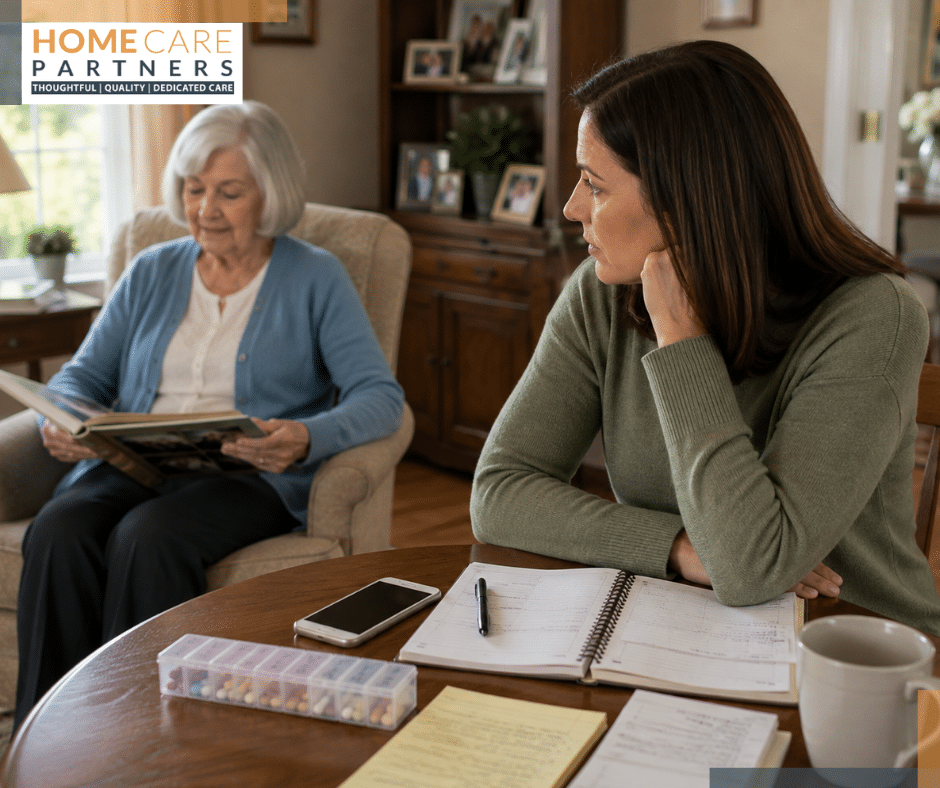
Have you become Mom’s care manager without even realizing it?
You thought you had more time. But memory loss doesn’t wait—and somewhere along the way, being a daughter started to feel like a full-time caregiving job.
Dementia Care at Home can help Mom remain in the place she knows and loves while giving you something you may desperately need, too: support.
The Emotional Reality for Family Caregivers
It often starts small.
Mom forgets an appointment. You remind her.
She leaves food untouched in the refrigerator. You start checking what she eats.
She seems confused about her medications, so you organize them and begin calling every day.
Then you notice she is less steady on her feet. Maybe she leaves the stove on, forgets to lock the door, or becomes anxious when she’s alone.
Before long, you aren’t simply checking on Mom anymore.
You’re managing meals, medications, appointments, safety, transportation, routines, and emergencies—all while trying to manage your own job, home, children, relationships, and responsibilities.
You may lie awake wondering, What if something happens when I’m not there?
And perhaps the hardest question is: How long can I keep doing this by myself?
For many daughters, considering Dementia Care at Home isn’t about doing less for Mom. It’s about making sure she has consistent support without requiring one family member to carry everything alone.
Understanding the Challenge
Memory loss can change much more than someone’s ability to remember names or dates.
A person living with dementia may have difficulty following familiar routines, preparing meals, remembering daily tasks, or recognizing potential safety concerns. Changes may happen gradually, which can make it difficult for families to recognize how much help Mom actually needs.
You may find yourself constantly checking:
- Did she eat?
- Did she take her medication as directed?
- Is she safe walking around the house?
- Did she leave the house unexpectedly?
- Is she lonely or frightened?
These worries can become exhausting.
Home-based dementia care provides another layer of support. A caregiver can help maintain routines, offer companionship, assist with everyday activities, and watch for potential safety concerns while Mom remains in familiar surroundings.
Why Staying at Home Often Helps
Home represents more than four walls.
It’s Mom’s favorite chair. The family photographs she recognizes. The kitchen where she made Sunday dinner. The bedroom she has slept in for years.
For someone experiencing memory changes, familiar surroundings may provide comfort and a sense of routine.
Dementia Care at Home allows support to come to Mom rather than requiring her to leave everything familiar behind.
A predictable daily structure may also make everyday life feel more manageable. Regular mealtimes, familiar activities, companionship, and consistent routines can provide stability while helping families feel more confident about Mom’s day-to-day care.
Memory Care at Home can also be personalized around Mom’s habits and needs. Instead of asking her to adjust to an entirely new environment, care can often be built around the life and routines she already knows.
How Home Care Partners Helps
Every family’s situation is different. Some families need a few hours of assistance. Others reach a point where Mom needs more consistent supervision and support.
Home Care Partners can provide Dementia Care at Home designed around your loved one’s daily needs.
Support may include:
- Medication reminders to help Mom stay connected to her established routine.
- Meal preparation and nutrition monitoring so families have greater confidence that meals are being prepared and eaten.
- Fall prevention and mobility support to help Mom move around her home more safely.
- Wandering supervision for individuals with dementia or Alzheimer’s who may become confused or leave home unexpectedly.
- Structured routines that provide consistency throughout the day.
- Companionship so Mom has someone nearby to talk with, share activities with, and provide reassurance.
- Respite for family caregivers so daughters, spouses, and other loved ones can work, rest, spend time with their families, or simply have time to recharge.
Most importantly, professional support doesn’t replace the family.
It supports the family.
You can still be the daughter who visits, laughs with Mom, looks through old photographs, and holds her hand—without every interaction revolving around a checklist of tasks.
Signs It May Be Time to Get Help
There isn’t always one dramatic moment when a family suddenly knows it’s time for Dementia Care at Home.
Often, it’s a collection of smaller changes.
You may want to consider additional support if you notice:
- Mom frequently forgetting meals or struggling with food preparation
- Confusion around medications or established routines
- Increased falls, stumbling, or difficulty moving safely
- Unexplained bruises or minor injuriesLeaving appliances on or doors unlocked
- Wandering or becoming confused about where she is
- Increasing isolation or loneliness
- Changes in personal hygiene or clothing
- Anxiety when she is left alone
- Family members constantly rearranging their lives to provide supervision
- Your own exhaustion, stress, or inability to keep up with caregiving responsibilities
You don’t have to wait for a crisis before exploring senior care at home.
Getting help earlier may give your family more time to create routines, understand Mom’s needs, and make thoughtful decisions rather than reacting during an emergency.
Asking for Help Is Love
For daughters especially, asking for help can bring complicated emotions.
You may think, She took care of me. I should be able to take care of her.
But caring for someone with memory loss can become more demanding over time. Loving Mom doesn’t mean you must personally provide every meal, every reminder, every ride, every check-in, and every hour of supervision.
Sometimes love means recognizing when one person cannot sustainably do everything.
Dementia caregiver support can give you space to be Mom’s daughter again—not only her scheduler, meal planner, safety monitor, and care manager.
Choosing Memory Care at Home can be an act of protection and dignity. It can mean building a circle of support around Mom so that one exhausted family member isn’t trying to hold everything together.
And accepting respite care for family caregivers doesn’t mean you are walking away.
It means you’re creating a caregiving plan that may be more sustainable for everyone.
You Don’t Have to Carry Dementia Care Alone
Maybe you thought you had more time.
Maybe you’ve slowly become Mom’s care manager without realizing how much responsibility you’ve taken on.
Or maybe you know something needs to change, but you’re unsure what the next step should be.
You don’t have to figure everything out today.
Start with a conversation.
Home Care Partners can help you explore Dementia Care at Home and determine what kind of support may make everyday life safer, more structured, and more manageable for Mom—and for you.
Sometimes, the bravest thing a daughter can do is ask for help.
Call or text Karla at Home Care Partners today at 402-780-1211.

Our Caregiving team provides personal one-on-one attention for your loved one. When you are ready to begin your care journey, we are the experts that will answer your questions and help you implement a plan.
Home Care Partners is locally owned and committed to providing Thoughtful, Quality, and Dedicated Care.
- Celebrating Our Home Care Hero Nick! - October 14, 2026
- In-Home Care or Assisted Living: How Families Compare the Two - October 11, 2026
- Medication Management for Seniors at Home: How Families Build a Safe, Simple Routine - October 11, 2026